

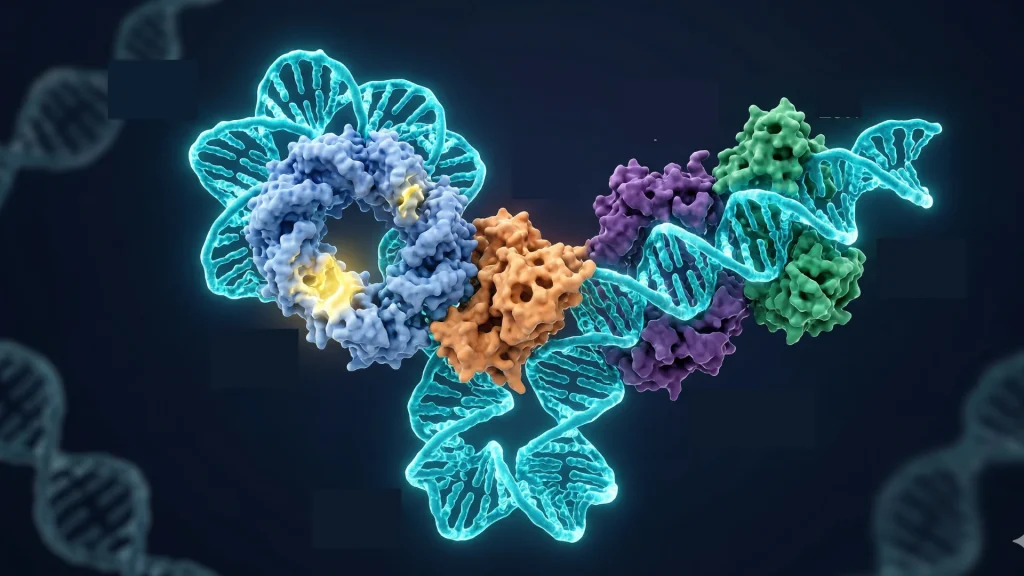
Overview The maintenance of chromosome ends, known as telomeres, is a fundamental process for genome stability in almost all eukaryotes. At the heart of this mechanism is telomerase, a specialized reverse transcriptase that adds telomeric repeats to counter the “end replication problem”. Although telomerase is a prime target for research into cancer and age-related disorders, our understanding of its diverse structural forms across species remained incomplete.
A new study published by researchers at the MRC Laboratory of Molecular Biology (LMB), Université de Sherbrooke, and Pascal Chartrand of CI2B, Université de Montréal, presents the first structure of the telomerase holoenzyme from budding yeast using high-resolution cryo-electron microscopy (cryo-EM), revealing a molecular architecture that diverges considerably from its human and ciliate counterparts.
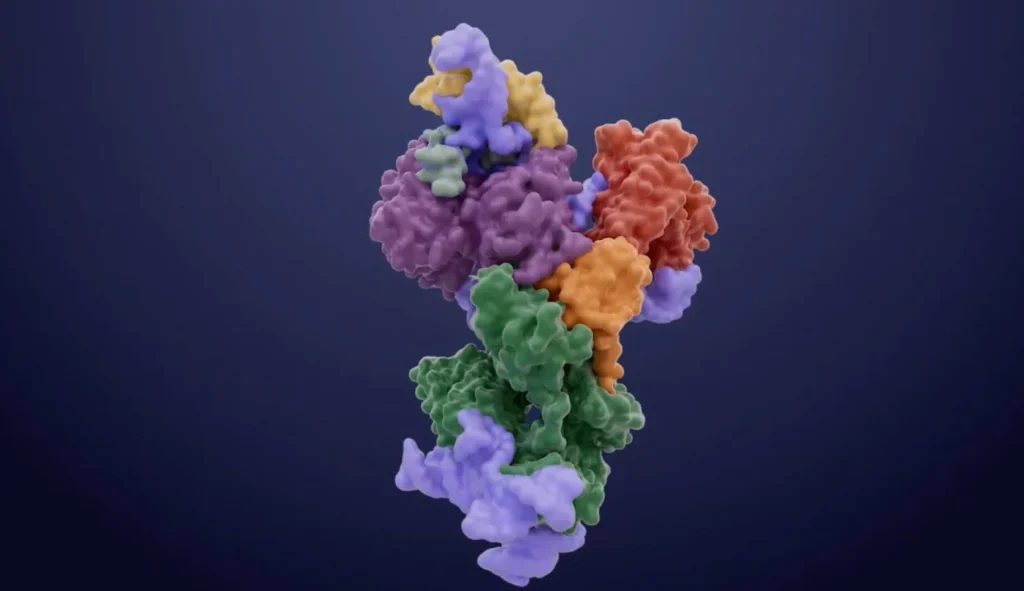
Unlocking the secrets of telomerase with yeast
A major discovery reveals the architecture of telomerase, an enzyme closely linked to aging and cancer.

Pascal Chartrand
Member of the Institut Courtois d’innovation biomédicale and senior co-author of the study